
Introduction
Chochołów preserves Poland’s longest row of traditional wooden highland houses, a remarkably intact 19th-century village where góral families maintain historic architecture while accommodating modern tourism beneath the towering peaks of the Western Tatras. This linear settlement stretches along a single main street featuring over 100 wooden houses built using traditional log construction without nails, many retaining their original whitewashed walls scrubbed with soapy water each spring. Moreover, Chochołów lies just 18 kilometers west of Zakopane and 23 kilometers south of Nowy Targ, making it one of the most accessible authentic highland villages in Poland’s Podhale region.
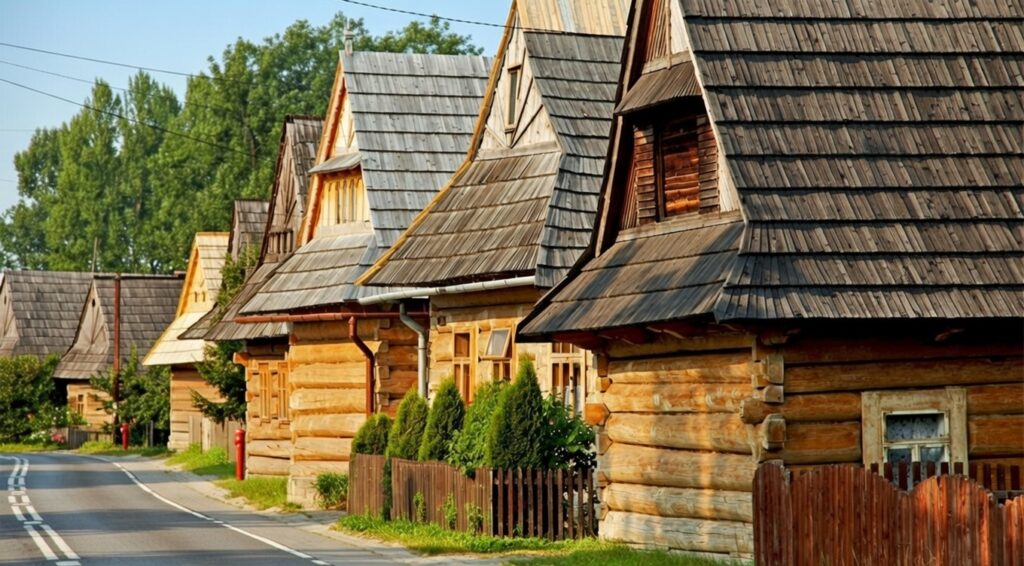
Chochołów appeals to architecture enthusiasts seeking genuine examples of Podhale wooden building traditions protected as historical monuments since 1970, as well as history buffs drawn to the 1846 Chochołów Uprising Museum documenting the region’s peasant rebellion. Additionally, photographers capture perfectly preserved whitewashed log cottages set against dramatic Tatra mountain backdrops, while families appreciate the village’s peaceful atmosphere and proximity to Chochołów Thermal Baths located just 3 kilometers away. Furthermore, visitors discover that Chochołów represents living heritage rather than a static museum, with local families still residing in centuries-old cottages and maintaining traditional cheese-making practices passed through generations.
This comprehensive guide explores Chochołów’s evolution from medieval settlement to UNESCO-worthy architectural ensemble, details the distinctive construction techniques that created Poland’s most cohesive wooden village, explains how to reach Chochołów from Zakopane and Kraków with practical transportation advice, and recommends traditional guesthouses where visitors experience authentic highlander hospitality in beautifully restored historic cottages. Consequently, whether you visit for a three-hour walking tour or overnight in a góral family home to experience traditional mountain culture, this guide provides everything needed to appreciate Poland’s finest preserved wooden highland village.
History of Chochołów: From Royal Village to Protected Heritage Site
Medieval Settlement and Royal Privileges
Chochołów established itself as a Wallachian settlement in the 14th century when Polish kings encouraged migration of shepherd communities from the Balkans and Carpathian regions to develop the sparsely populated Podhale highlands. These Wallachian colonists brought distinctive pastoral traditions including summer mountain grazing (transhumance), sheep cheese production, and wooden architectural techniques adapted to harsh alpine conditions. King Casimir the Great granted Chochołów special royal village status in the 14th century, exempting residents from certain feudal obligations in exchange for defending mountain passes against Slovak and Hungarian incursions.
The village name likely derives from “Chochół,” referring to dried corn husks traditionally used as roof thatching before wooden shingles became standard. Medieval Chochołów developed along a single road following the Chochołowski Stream valley, creating the distinctive “ulicówka” (street village) layout that survives unchanged today. This linear settlement pattern maximized agricultural land by positioning houses with their narrow gable ends facing the road, allowing deep rectangular plots extending behind each cottage for barns, sheds, and gardens.
Development of Highland Wooden Architecture
By the 17th and 18th centuries, Chochołów’s carpenters perfected the distinctive Podhale building style combining functional highland adaptation with decorative elements reflecting growing regional prosperity. Traditional cottages employed horizontal log construction using massive fir trunks split lengthwise and notched at corners without nails or metal fasteners, allowing the wood to expand and contract with seasonal temperature extremes. The oldest surviving structure, the Bafia Cottage built in 1798 and now housing the Chochołów Uprising Museum, demonstrates these construction techniques preserved remarkably intact thanks to careful material selection and traditional maintenance practices.
Chochołów’s carpenters achieved legendary status throughout Podhale, with the cottage at Number 24 demonstrating extraordinary skill—its entire front wall constructed from a single enormous fir trunk felled in the late 19th century. Additionally, highland builders developed the distinctive half-hip roof (połaciowy) with steep slopes and overhanging eaves protecting log walls from rain and snow, covered with hand-split wooden shingles held by wooden pegs. Furthermore, decorative elements including carved crossbeams (rygle), door frames with turned columns, and gable decorations called “słoneczka” and “pazdury” transformed functional structures into folk art masterpieces representing family wealth and carpenter pride.
The 1846 Chochołów Uprising
Chochołów earned lasting historical significance on February 18-22, 1846, when local górale led by Andrzej Fijolek, Jan Andrusikiewicz, and other village leaders organized one of the few successful peasant uprisings in 19th-century Poland. The rebellion erupted during the greater Spring of Nations revolutionary period sweeping Europe, with Chochołów peasants demanding abolition of feudal obligations (pańszczyzna) and land reforms. Armed primarily with farming implements, walking sticks (ciupagi), and hunting muskets, approximately 300 Chochołów residents marched to nearby Nowy Targ, briefly capturing the town before Austrian authorities suppressed the uprising with military force.
While the rebellion failed militarily, Chochołów’s courage inspired similar peasant movements across Austrian-controlled Galicia and contributed to gradual feudal reforms throughout the Habsburg Empire. The uprising demonstrated highlander independence and willingness to resist oppression, themes celebrated in Polish romantic literature and regional folk traditions. Today, the Bafia Cottage museum preserves this history through exhibits documenting the uprising’s causes, key figures, and lasting impact on Podhale society.
20th Century Preservation and Recognition
Unlike most Podhale villages where economic development led residents to demolish historic wooden cottages and replace them with modern brick construction, Chochołów’s residents maintained their ancestral homes through careful maintenance and selective modernization. This preservation stemmed partly from strong family traditions valuing architectural heritage, but also from economic factors—Chochołów’s relative isolation from major roads reduced development pressure that transformed nearby villages. By the 1960s, architectural historians recognized Chochołów’s exceptional integrity, leading to official heritage protection in 1970 when approximately 50 cottages received individual monument status.
The village’s architectural ensemble earned recognition as one of Poland’s best-preserved examples of compact wooden rural settlement, with the linear “ulicówka” layout and uniform building style creating remarkable visual coherence. International heritage organizations frequently cite Chochołów when discussing Polish Wooden Architecture Routes, and the village appeared on preliminary UNESCO World Heritage tentative lists. Moreover, heritage protection regulations now require homeowners to maintain traditional external appearance including whitewashed walls, wooden shingle roofs, and original window proportions, ensuring future generations inherit this extraordinary architectural legacy.
What to See in Chochołów: Walking the Street of Wooden Houses
⭐ The Main Street: Poland’s Longest Wooden Village Row
Chochołów’s main street (Chochołów I) stretches approximately 1.5 kilometers through the village center, lined on both sides with whitewashed log cottages creating Poland’s longest uninterrupted row of traditional wooden architecture. Walking this street from north to south requires 20-30 minutes at a leisurely pace allowing time to admire architectural details, with the dramatic Western Tatra peaks providing spectacular backdrop throughout. ⭐ Visit during morning hours (8:00-10:00 AM) when low-angle sunlight emphasizes the textured log construction and shadows define carved decorative elements, creating optimal photography conditions before tourist buses arrive from Zakopane around 11:00 AM.
Each cottage displays distinctive characteristics despite following common architectural patterns, with variations in decorative crossbeams, door carvings, window styles, and roof ornamentation revealing different construction periods and carpenter traditions. Moreover, many cottages maintain traditional painted details including blue or green window frames, decorative gable paintings, and carved wooden shutters preserved through regular maintenance by current residents. Additionally, the consistent white-washed appearance results from Easter and Corpus Christi traditions when góral families scrub exterior log walls with soapy water, creating the characteristic light color that distinguishes Chochołów from natural-wood highland villages elsewhere in Podhale.
⭐ Museum of the 1846 Chochołów Uprising (Bafia Cottage)
The Chochołów Uprising Museum occupies the historic Bafia Cottage, a traditional góral residence built in 1798 and subsequently renovated in 1889, now operated as a branch of the Tatra Museum showcasing both the 1846 peasant rebellion and authentic highland domestic architecture. The cottage preserves original interior layout including the vestibule (sień), “black chamber” (izba czarna) with open hearth, “white chamber” (izba biała) serving as the main living space, bedchamber, and small attic storage room above. Exhibition boards displayed throughout document uprising chronology through historical texts, documents, facsimiles, and period prints, while preserved furniture and household implements demonstrate 19th-century góral daily life.
Museum highlights include authentic weapons used by insurgents including modified farming tools, hunting rifles, and the distinctive góral walking stick/axe (ciupaga) that served dual purposes as hiking aid and weapon. Additionally, exhibits explain connections between Chochołów’s rebellion and broader 19th-century Polish independence movements, featuring materials related to poet and conspirator Seweryn Goszczyński who supported highland peasant causes. Furthermore, the cottage architecture itself represents a primary exhibit, with exposed log construction, hand-adzed beams, wooden floor planks, and traditional smoke-blackened ceiling timbers demonstrating centuries-old building techniques.
Practical Information: Open Wednesday-Sunday 10:00 AM-2:00 PM (closed Monday-Tuesday). Last entry 30 minutes before closing. Admission: 6 PLN adults, 4.50 PLN reduced rate, free on Sundays. Guided tours available for 30 PLN (advance booking recommended for English-language tours). Phone: +48 18 201 52 05. The museum entrance sits at Chochołów 75, clearly marked with signage visible from the main street.
Traditional Cottage Construction Details
Beyond the museum, numerous privately-owned cottages throughout Chochołów demonstrate variations in traditional construction techniques worth examining closely during walking tours. The distinctive log construction employs massive fir trunks split lengthwise into halves that interlock at building corners using complex notching techniques, with gaps between logs traditionally filled using moss, oakum, or clay mixed with horsehair. Modern preservation allows discrete interior insulation while maintaining authentic external appearance, enabling year-round habitation in structures originally designed for harsh mountain winters.
Roof construction follows the traditional half-hip style (połaciowy) with steep 45-50 degree slopes allowing snow to slide off naturally, covered with hand-split wooden shingles (gont) made from larch or spruce wood and fastened using wooden pegs rather than nails. The overhanging eaves (okap) extend 50-80 centimeters beyond exterior walls, protecting log construction from rain damage while creating covered porches along building perimeters. Additionally, gable decorations including carved “słoneczka” (sun symbols) and “pazdury” (claw-like projecting beams) serve both decorative and structural functions, bracing roof trusses against strong mountain winds while displaying carpenter skill and family identity.
Cottage Number 24: The One-Tree Wonder
Cottage Number 24 represents Chochołów’s most famous architectural curiosity, its entire front wall constructed from a single enormous fir tree felled in the late 19th century by legendary carpenter known as “Koisa.” This extraordinary structural element measures approximately 12 meters long and 60-80 centimeters in diameter, demonstrating both the massive old-growth forests that once covered the Tatra foothills and the exceptional skill required to process such enormous timber using only hand tools. The cottage stands as testament to 19th-century highland craftsmanship, when carpenters selected and processed building materials with meticulous care impossible to replicate using modern industrial methods.
Visitors can identify the one-tree cottage by its unusually uniform log appearance along the front facade, lacking the natural variations in log size and color typical of multi-tree construction. Moreover, local guides sharing Chochołów tours often highlight this cottage while explaining traditional timber selection, processing, and construction techniques that created such impressive architectural achievements. Additionally, the cottage remains privately owned and occupied, representing Chochołów’s living heritage character rather than museum preservation—residents maintain the structure using traditional methods passed through family generations.
Traditional Farming Outbuildings
Behind the main cottages facing the street, deep rectangular plots contain traditional farming structures including barns (stodoły), sheds (szopy), and granaries (spichlerze) constructed using similar log techniques as residential buildings. These outbuildings reveal the complete traditional góral homestead layout, with residential structures positioned at the street front while agricultural buildings and livestock shelters occupied rear portions of narrow plots extending sometimes 60-80 meters deep. Consequently, exploring the village requires venturing beyond the main street to discover these agricultural structures, though respect for private property means visitors should observe from public areas rather than entering residential plots without permission.
The Village Chapel and Cemetery
Chochołów’s village chapel serves the local Catholic community while maintaining traditional highland religious architecture including wooden construction, distinctive onion-dome tower, and interior decorations featuring góral folk art elements. The adjacent cemetery preserves traditional wooden grave markers and iron crosses typical of highland burial traditions, offering insight into family histories spanning multiple centuries. Moreover, the cemetery location provides elevated views across the village, allowing photographers to capture the linear settlement layout against Tatra mountain backdrop—particularly effective during late afternoon when western light emphasizes architectural details.
How to Reach Chochołów: Transportation Guide
From Zakopane (18 km / 30 minutes)
Zakopane provides the most convenient base for visiting Chochołów, with regular bus connections and short travel times making day trips or half-day excursions effortless. Koleje Małopolskie operates bus route A15 departing Zakopane bus station approximately every 2 hours throughout the day, with journey times of 30-36 minutes and fares around 6-9 PLN. Buses stop directly in Chochołów village center near the main street’s southern end, requiring only 2-3 minutes walking to reach the historic cottage district. Morning departures around 8:00-9:00 AM allow full morning exploration with afternoon return, while later buses accommodate visits combined with Chochołów Thermal Baths just 3 kilometers away.
Alternatively, shared taxi services (busy) run along the Zakopane-Chochołów route charging similar fares to buses but offering door-to-door convenience and slightly faster journey times. Drivers congregate near Zakopane bus station and depart when vehicles fill (typically 4-8 passengers), though English-language communication may prove challenging. Furthermore, renting bicycles in Zakopane enables scenic cycling along relatively flat valley roads connecting the two villages, with journey times around 1-1.5 hours each way depending on fitness level and frequent photo stops.
From Nowy Targ (23 km / 35 minutes)
Visitors arriving at Nowy Targ Market on Thursday or Saturday can conveniently combine market visits with afternoon trips to Chochołów using public transportation. The route requires traveling first from Nowy Targ to Zakopane via train (22-24 minutes, 9-14 PLN), then catching bus A15 toward Chochołów (30 minutes, 6-9 PLN). Total journey time including connections ranges from 1.5-2 hours depending on schedule coordination. Consequently, travelers planning to visit both Nowy Targ Market and Chochołów in a single day should start early (arrive Nowy Targ by 7:00 AM), complete market shopping by 11:00 AM, then travel to Chochołów for afternoon exploration before returning to accommodation bases in Zakopane or Nowy Targ.
From Kraków (100 km / 1 hour 40 minutes)
Direct public transportation from Kraków to Chochołów requires connections through either Zakopane or Nowy Targ, making rental car the most practical option for travelers based in Poland’s cultural capital. The driving route follows highway E77 south from Kraków through Rabka-Zdrój to Nowy Targ, then continues west on road 957 toward Zakopane before turning south toward Chochołów. Journey time runs approximately 1 hour 40 minutes under normal traffic conditions, allowing comfortable day trips from Kraków accommodations while providing flexibility to visit multiple Podhale attractions including Nowy Targ Market, Chochołów village, and Chochołów Thermal Baths in a single excursion.
Alternatively, numerous tour operators based in Kraków offer organized day trips combining Chochołów village with Zakopane sightseeing, Gubałówka cable car rides, and visits to Chochołów Thermal Baths. These tours typically include transportation, English-speaking guides, and sometimes lunch or traditional cheese tastings, priced around 200-300 PLN per person. Moreover, organized tours eliminate navigation concerns and parking challenges while providing cultural context through guide commentary, though they offer less flexibility than independent travel and may allocate insufficient time for photography or leisurely village exploration.
Parking in Chochołów
Free street parking exists along Chochołów’s main road and side streets, though spaces fill quickly during summer weekends (June-August) and holidays when domestic tourism peaks. ⭐ Arrive before 10:00 AM to secure convenient parking near the village center, otherwise be prepared to park 10-15 minutes walking distance from the main historic cottage district. Additionally, the nearby Chochołów Thermal Baths complex (3 kilometers away) offers large paid parking lots where visitors might leave vehicles while taking taxis or walking to the village, though the 40-minute walk along roads without dedicated pedestrian paths makes this impractical except for serious hikers.
Best Time to Visit Chochołów: Seasonal and Daily Timing
Daily Timing Considerations
⭐ Morning hours between 8:00-10:00 AM provide the most peaceful atmosphere for Chochołów exploration, with minimal tour group presence, optimal photography light emphasizing architectural details, and opportunities to observe village residents engaged in morning routines including garden work and cottage maintenance. Tour buses from Zakopane and Kraków typically arrive between 10:30 AM-12:00 PM, bringing crowds that fill the narrow main street and create challenging photography conditions as groups cluster around the most photogenic cottages. Consequently, serious architecture enthusiasts and photographers should prioritize early arrival, either staying overnight in local guesthouses or taking first morning buses from Zakopane.
Late afternoon visits (3:00-6:00 PM) offer second-best timing after morning tours depart, with western sunlight creating warm golden tones on whitewashed walls and Tatra peaks providing dramatic backlit silhouettes. Moreover, late afternoon visits allow combining Chochołów with morning activities at Nowy Targ Market (Thursday/Saturday) or Zakopane attractions, creating full-day itineraries. Nevertheless, the Chochołów Uprising Museum closes at 2:00 PM, meaning afternoon-only visitors miss interior exhibits though exterior architecture remains accessible for photography and appreciation.
Spring (April-May)
Spring brings the traditional cottage whitewashing season when góral families scrub exterior log walls with soapy water before Easter and Corpus Christi religious celebrations, creating the brilliant white appearance that defines Chochołów’s visual character. Visitors arriving in April-May might witness residents engaged in this traditional maintenance, offering unique cultural insight and photography opportunities. Additionally, spring weather proves pleasantly mild for walking tours without summer heat, though April can bring unpredictable rain requiring waterproof clothing and sturdy footwear. Furthermore, spring wildflowers bloom in village gardens and nearby meadows, adding colorful foreground elements to architectural photography.
Summer (June-August)
Summer attracts peak tourist numbers to Chochołów, with daily tour buses arriving from Kraków and packed with visitors drawn by warm weather and school vacation periods. The village appears at its most photogenic with brilliant whitewashed walls, colorful flower gardens, and lush green meadows surrounding historic cottages. However, summer also means largest crowds, reduced opportunities for solitary architectural appreciation, and hot midday temperatures (often 25-30°C / 77-86°F) making long walking tours uncomfortable. ⭐ Summer visitors should combine Chochołów village exploration with afternoon relaxation at nearby Chochołów Thermal Baths, creating balanced itineraries offering both cultural education and refreshing recreation.
Autumn (September-October)
Autumn represents the ideal season for Chochołów visits, combining pleasant temperatures, manageable crowds after summer peak, and spectacular mountain foliage creating vibrant backdrops for architectural photography. September maintains warm sunny weather (15-20°C / 59-68°F) perfect for walking tours, while October brings cooler conditions and autumn colors transforming Tatra peaks into dramatic orange and gold panoramas visible from village streets. Moreover, autumn harvest season means local families engage in traditional food preservation activities including cheese making and produce canning, sometimes visible through cottage windows or in backyard workshops. Additionally, September weekends occasionally feature folk festivals celebrating harvest traditions, adding cultural performances and traditional costume displays to standard village attractions.
Winter (November-March)
Winter transforms Chochołów into a snow-covered fairy tale village, with white-roofed cottages creating magical atmosphere particularly during fresh snowfall. However, winter visits require serious cold-weather preparation as temperatures frequently drop below -10°C (14°F) and icy conditions make walking potentially hazardous. The Chochołów Uprising Museum maintains reduced winter hours and may close during harsh weather, though exterior architecture remains accessible for photography by hardy visitors willing to brave mountain winter conditions. ⭐ Combining winter Chochołów visits with soaking at Chochołów Thermal Baths proves particularly appealing, allowing architectural appreciation followed by warming up in 36°C (97°F) thermal pools.
Where to Eat in Chochołów: Traditional Highland Cuisine
Restauracja U Śliwy
Restauracja U Śliwy serves authentic góral cuisine in a rustic interior combining exposed wood and stone elements creating traditional highland atmosphere within a building located at the crossroads toward Witów village. The menu features generous portions of home-style Polish comfort food including excellent rosół (chicken soup) served with fresh noodles (12 PLN), hearty żurek (sour rye soup) in bread bowls (14 PLN), and the house specialty kociołek chochołowski—a rich stew combining pork, sausage, vegetables, and highland seasonings slow-cooked in cast iron pots (28 PLN). Additionally, the restaurant offers regional favorites including placki ziemniaczane (potato pancakes) served with sour cream and mushroom sauce (18 PLN), and properly grilled oscypek sheep cheese with cranberry sauce (12 PLN).
Prices remain remarkably affordable compared to tourist-focused restaurants in nearby Zakopane, with complete meals including soup, main course, and beverage costing 35-50 PLN per person. Moreover, large portions often prove sufficient for sharing, making Restauracja U Śliwy exceptional value for budget-conscious travelers. Furthermore, the restaurant accommodates tour groups and accepts advance reservations for parties of 6+ people, and offers takeaway service for visitors planning picnics or returning to Zakopane accommodations.
Gazdówka u Zająca
Gazdówka u Zająca emphasizes locally-sourced ingredients and traditional preparation methods, with menu items highlighting fresh sheep cheeses (bryndza and oscypek), regional lamb dishes, and seasonal vegetables from nearby highland farms. The restaurant occupies a renovated traditional cottage maintaining authentic architectural details including exposed log walls, low ceilings with wooden beams, and traditional góral decorative elements. Standout dishes include baranina po góralsku (highland-style lamb) slow-roasted with root vegetables and mountain herbs (42 PLN), and pierogi filled with bryndza sheep cheese and potatoes (22 PLN for generous portion).
The welcoming atmosphere and family-run operation create genuine hospitality rarely found in tourist-oriented establishments, with owners often personally explaining dish ingredients and preparation techniques to interested visitors. Additionally, the restaurant stocks regional craft beers and house-made herbal liqueurs infused with mountain plants, providing authentic beverage pairings for traditional meals. Nevertheless, English-language menus may not always be available, requiring basic Polish language skills or willingness to navigate menu items using translation apps.
Restauracja Chochołowska (at Thermal Baths)
Located within the Chochołów Thermal Baths complex approximately 3 kilometers from the village center, Restauracja Chochołowska serves modern interpretations of Polish cuisine alongside international menu options, catering primarily to thermal bath visitors seeking convenient on-site dining. The menu includes traditional dishes with contemporary presentations such as duck breast with seasonal vegetables (48 PLN) and salmon with herb butter (52 PLN), plus simpler options including burgers, pizzas, and salads (25-35 PLN). While not focused on authentic highland cuisine like village restaurants, Restauracja Chochołowska offers reliable quality and comfortable modern atmosphere appreciated by families and visitors preferring international flavors.
Traditional Foods to Try
Kociołek chochołowski represents the village’s signature dish, a hearty stew combining multiple meat types (typically pork, beef, and kielbasa) with potatoes, cabbage, and highland seasonings slow-cooked for hours until flavors meld into rich, warming comfort food perfect for mountain climate. Each restaurant and family maintains slightly different recipes, with variations in meat selection, spice combinations, and vegetable proportions, making kociołek comparisons an entertaining culinary pursuit during Chochołów visits.
Beyond restaurant dining, visitors should seek opportunities to taste oscypek and bryndza directly from local producers, some of whom maintain small farm shops or sell from their cottages. Authentic oscypek purchased in Chochołów comes from nearby mountain shepherds practicing traditional smoking techniques, often offering superior flavor to market-purchased varieties. Additionally, some guesthouses offer breakfast or dinner featuring homemade góral specialties prepared using family recipes passed through generations, providing the most authentic culinary experiences possible.
Where to Stay in Chochołów: Traditional Guesthouse Accommodation
Traditional Góral Guesthouses
Numerous family-run guesthouses (pokoje gościnne) operate throughout Chochołów, many occupying restored traditional cottages allowing guests to experience authentic highland architecture from inside. These accommodations typically offer simple but comfortable rooms with private bathrooms, traditional wooden furniture, and mountain views, priced affordably from 35-80 PLN per person per night depending on room size and amenities. ⭐ Staying in traditional guesthouses provides immersive cultural experiences as hosts often share family histories, demonstrate traditional crafts, and serve homemade góral breakfasts featuring local cheeses, fresh bread, and mountain honey.
Pokoje Gościnne U Gosi offers comfortable rooms with en-suite bathrooms starting from 50 PLN per person, including access to a fully-equipped shared kitchen allowing self-catering for budget travelers. The property features a fenced garden with barbecue facilities and free parking, plus the owner arranges traditional cheese tastings and provides recommendations for local hiking trails. Additionally, Pokoje Gościnne U Stasi maintains rooms in a stylishly decorated traditional cottage with Wi-Fi, television, and shared kitchen facilities, priced from 25 PLN per person—exceptional value for clean, authentic accommodation in protected historic buildings.
Dom Cypryda and Modern-Traditional Hybrids
Dom Cypryda represents newer construction designed to harmonize with traditional village aesthetics while incorporating modern comforts including central heating, contemporary bathrooms, and LCD televisions. Rooms feature wood-paneled interiors, mountain views, and Wi-Fi connectivity, priced from 35 PLN per person. The property includes garden furniture, barbecue area, and designated parking—amenities appreciated by families and visitors arriving by car. Moreover, the smoke-free policy throughout the property appeals to guests sensitive to cigarette odors sometimes present in older traditional buildings.
Wynajem Pokoi U Gosi
Wynajem Pokoi U Gosi caters to larger groups and families, offering 20 total beds distributed across multiple rooms with private bathrooms. The guesthouse includes a fully-equipped kitchen allowing meal preparation, particularly valuable for extended stays or visitors with dietary restrictions. The fenced property provides secure parking and outdoor green space with grilling facilities suitable for summer evening gatherings. Rates start around 50 PLN per person, with discounts available for longer stays and group bookings. Furthermore, the hosts organize special events including birthday parties and New Year’s celebrations, making this guesthouse suitable for special occasion travel.
Staying at Chochołów Thermal Baths
The Chochołów Thermal Baths complex located 3 kilometers from the village offers on-site hotel accommodation combining thermal pool access with comfortable modern rooms. While lacking the authentic character of village guesthouses, the thermal baths hotel provides convenience for visitors prioritizing spa facilities over cultural immersion, with packages including unlimited pool access and meals at the on-site restaurant. Rates typically start around 250-350 PLN per person including breakfast and thermal bath access, positioning this option in the mid-range category suitable for families and visitors seeking relaxation-focused holidays.
Alternative: Zakopane Base
Zakopane’s extensive accommodation options ranging from budget hostels to luxury mountain resorts make it a practical base for day trips to Chochołów, particularly for visitors exploring multiple Tatra region attractions. The 18-kilometer distance and regular bus connections mean staying in Zakopane provides greater evening entertainment, restaurant diversity, and shopping options while maintaining easy access to Chochołów for morning or afternoon visits. Moreover, Zakopane accommodation pricing varies dramatically by season, with shoulder-season rates (May, September-October) sometimes matching or undercutting Chochołów guesthouse prices while offering significantly more amenities.
What to See Near Chochołów: Day Trip Combinations
⭐ Chochołów Thermal Baths (3 km)
Chochołowskie Termy (Chochołów Thermal Baths) ranks among Poland’s premier geothermal spa complexes, featuring over 30 thermal pools filled with naturally heated mineral water ranging from 32-36°C (90-97°F) drawn from 3,600-meter deep wells. The modern facility includes outdoor pools with mountain views, indoor therapeutic pools, water slides, lazy rivers, children’s play areas, and extensive sauna zones, creating comprehensive spa experiences suitable for families, couples, and wellness-focused travelers. Moreover, the thermal baths remain open year-round, with winter soaking beneath snow-covered Tatra peaks providing particularly memorable experiences after December-February Chochołów village visits.
Standard admission tickets (2.5 hours) cost approximately 60-80 PLN weekdays and 70-90 PLN weekends, with extended time and all-day passes available at higher rates. Additionally, the complex offers spa treatments, massage services, and wellness programs bookable in advance. The thermal baths’ proximity to Chochołów village (3 kilometers) makes combined visits ideal, allowing morning architectural exploration followed by afternoon relaxation, or vice versa. Regular taxi services connect the village and thermal baths for 15-20 PLN, or visitors can walk the route in approximately 40 minutes along roads with limited pedestrian infrastructure.
Białka Tatrzańska and Thermal Pools (12 km)
The village of Białka Tatrzańska offers alternative thermal pool complexes including Terma Bania and Termy Bukovina, both featuring outdoor thermal pools, water slides, saunas, and mountain views. While slightly farther from Chochołów than Chochołowskie Termy, Białka’s pools attract fewer crowds during peak season and sometimes offer better value, with admission around 50-70 PLN for 3-hour sessions. Additionally, Białka Tatrzańska serves as a launching point for rafting trips on the Białka River and hiking trails into the less-visited eastern Tatra foothills, making it suitable for active travelers seeking outdoor adventure combined with thermal relaxation.
Zakopane and Gubałówka Hill (18 km)
Poland’s mountain capital Zakopane provides countless attractions within easy reach of Chochołów, making combined visits practical for travelers with rental cars or willing to navigate public transportation connections. Highlights include the Gubałówka funicular offering panoramic Tatra views from a 1,120-meter summit accessible via cable car (45 PLN round-trip), the pedestrian-only Krupówki street lined with restaurants and souvenir shops, and numerous hiking trails ranging from easy valley walks to challenging mountain ascents. Moreover, Zakopane’s distinctive wooden architecture including the Jaszczurówka Chapel and Villa Koliba showcases the early 20th-century Zakopane Style that influenced highland building traditions throughout Podhale.
Nowy Targ Market (23 km)
Combining Chochołów village visits with Nowy Targ Market shopping trips creates comprehensive cultural experiences showcasing both architectural heritage and living highland commerce. Market days (Thursday and Saturday) allow morning shopping for oscypek cheese, sheepskin coats, and traditional handicrafts followed by afternoon Chochołów exploration, or vice versa. The route between locations requires either rental car (35-minute drive) or public transportation via Zakopane connections, making full-day itineraries necessary to accommodate both destinations plus travel time.
Orava Castle, Slovakia (30 km)
Slovakia’s dramatic Orava Castle perches atop a steep limestone cliff overlooking the Orava River just 30 kilometers south of Chochołów, easily accessible via border crossing for visitors holding appropriate documents. The medieval fortress complex climbs vertically through multiple architectural periods, housing museums displaying Slovak folk culture, weapons, and Gothic art. Furthermore, Orava Castle gained international fame as the primary filming location for F.W. Murnau’s 1922 silent horror film “Nosferatu,” with the castle’s Gothic architecture creating appropriately eerie vampire atmosphere that cinematographers captured dramatically despite primitive film technology.
Practical Tips for Visiting Chochołów
Photography Etiquette and Best Practices
⭐ Chochołów’s cottages remain privately owned and occupied by góral families who value privacy despite living in heritage-protected architecture frequented by tourists. Always request permission before photographing residents directly, avoid peering through windows or entering private property beyond clearly public street areas, and respect “Private Property” signs posted at cottage entrances. Most residents tolerate respectful photography of exterior architecture from public streets, understanding tourism’s economic importance to the village, but intrusive behavior including drone flights over private yards or unauthorized entries onto residential plots damages community-tourist relationships.
Morning hours (8:00-10:00 AM) provide optimal photography conditions with soft directional light emphasizing log construction textures and shadows defining architectural details. Additionally, spring whitewashing season (April-May) creates the most brilliant cottage exteriors, while autumn foliage and winter snow add seasonal interest to architectural compositions. Furthermore, using polarizing filters reduces glare from whitewashed walls and enhances contrast between cottages and blue mountain sky, significantly improving image quality compared to unfiltered photography.
What to Bring
Comfortable walking shoes with good traction prove essential for exploring Chochołów’s streets, some sections remaining unpaved gravel that becomes muddy after rain. Additionally, spring and autumn visits require layered clothing as morning temperatures in the Tatra foothills can be significantly cooler than forecasts suggest, while afternoon sun warms conditions considerably. Sunscreen and sunglasses become necessary during summer visits, as reflected light from whitewashed cottages intensifies UV exposure beyond typical levels.
Bring sufficient cash for museum admission, restaurant meals, and potential cottage-produced cheese purchases, as most small village businesses and family guesthouses lack credit card processing capabilities. ATMs exist in nearby Zakopane and Nowy Targ but not within Chochołów itself. Moreover, carrying reusable water bottles reduces plastic waste and provides hydration during walking tours, though village shops sell beverages if needed.
Language Considerations
Most Chochołów residents speak Polish and góral dialect, with very limited English proficiency outside of a few younger individuals working in tourism-related businesses. The Chochołów Uprising Museum provides some English-language exhibition materials, though guided tours typically conduct in Polish unless English guides are requested and available at booking time. Nevertheless, Chochołów’s architectural attractions require minimal language skills for appreciation, as exterior building observation needs no verbal communication. Moreover, friendly attitudes and gestures facilitate basic interactions including requesting photography permission or asking simple directions.
Accessibility Limitations
Chochołów’s historic character presents significant accessibility challenges for visitors with mobility limitations, as traditional cottages lack wheelchair ramps and feature steep entrance steps, narrow doorways, and uneven floor surfaces. The main village street includes paved sections suitable for wheelchair users, though some stretches remain gravel or cobblestone creating difficult navigation. Moreover, the Chochołów Uprising Museum’s cottage layout with multiple rooms, stairs, and narrow passages proves nearly impossible for wheelchair access. Consequently, visitors with mobility concerns should recognize that Chochołów appreciation focuses primarily on exterior architectural observation from the main street rather than interior cottage exploration.
Seasonal Events and Festivals
⭐ Chochołów occasionally hosts folk festivals celebrating highland traditions including cheese-making demonstrations, traditional music performances, and góral costume displays. These events typically occur during summer months (July-August) and around major holidays including Corpus Christi when religious processions move through village streets. Check the village website or inquire at tourist information centers in Zakopane for current event schedules, as festival dates vary annually and aren’t widely promoted outside Polish-language media. Attending during festival periods provides exceptional cultural experiences but also brings significantly larger crowds and reduced photography opportunities due to event infrastructure and tourist numbers.
Combining Attractions for Full-Day Itineraries
⭐ The most efficient full-day itinerary combines morning Chochołów village exploration (8:00-11:00 AM) when lighting and crowds prove optimal, followed by lunch at village restaurants (11:00 AM-12:00 PM), then afternoon thermal bath relaxation at Chochołowskie Termy (1:00-5:00 PM). This schedule allows comprehensive cultural appreciation plus physical relaxation, creating balanced experiences appealing to both architecture enthusiasts and wellness-focused travelers. Alternatively, combining Chochołów with Nowy Targ Market (Thursday/Saturday) requires earlier starts (7:00 AM market arrival) but rewards visitors with both architectural and commercial highland traditions in single excursions.