
Introduction
Rogalin Palace Poland combines an 18th-century aristocratic residence with one of Europe’s largest concentrations of monumental oak trees, including three legendary specimens called Lech, Czech, and Rus. This historic estate 20 kilometers south of Poznań offers visitors Baroque palace interiors, a renowned art gallery, and access to nearly 2,000 centuries-old oaks growing along the Warta River valley. Moreover, Rogalin Palace Poland appeals equally to culture lovers, landscape photographers, and nature enthusiasts seeking quieter alternatives to overcrowded big-city attractions.
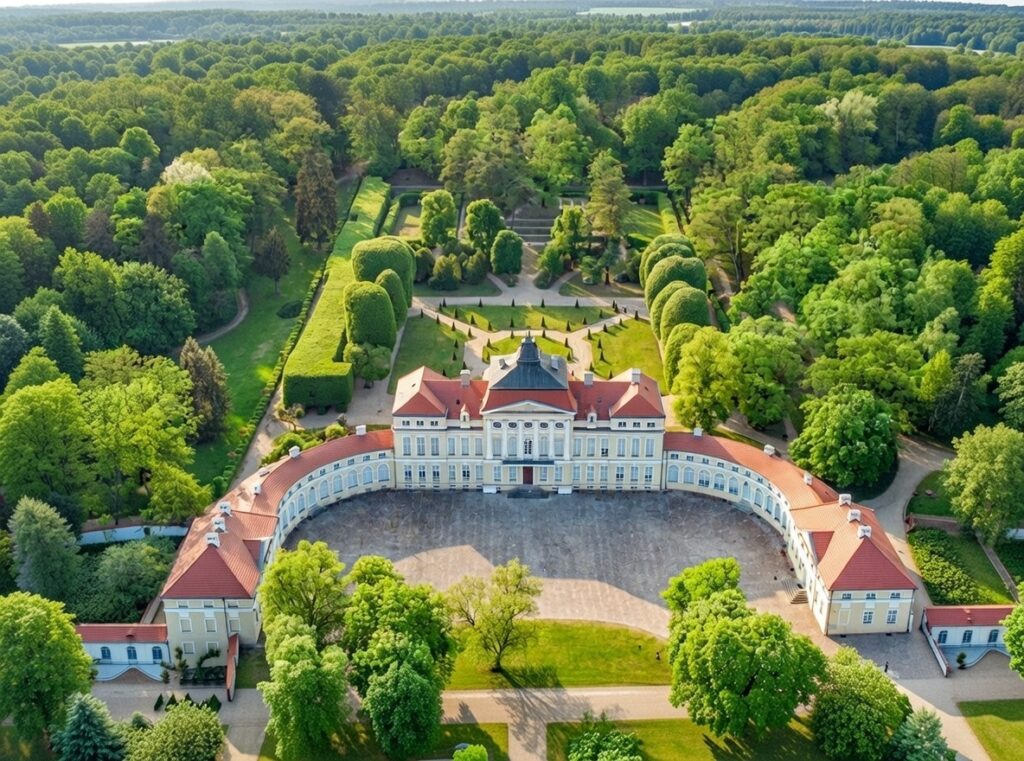
The Rogalin Palace Poland complex belongs to the National Museum in Poznań and includes the main palace, Edward Raczyński’s painting gallery, carriage house, mausoleum, and extensive landscape park. Additionally, the surrounding Rogalin Landscape Park protects approximately 1,435 oak trees, 860 of which are registered natural monuments with trunk circumferences reaching up to 9.15 meters. Furthermore, the three named oaks Lech, Czech, and Rus symbolize Slavic founding legends while representing some of Poland’s oldest trees, with Rus estimated around 800 years old.
This guide reveals the best times to photograph the legendary oaks without crowds, little-known trails through monument oak groves, and quiet palace corners most tour groups miss. Additionally, you will learn how to combine Rogalin with nearby Kórnik Castle and Poznań for a full-day Greater Poland heritage itinerary. Furthermore, practical sections cover tickets, opening hours, transport, dining options, accommodation, and insider tips for different traveler profiles.
History of Rogalin Palace Poland: Aristocratic Residence and Oak Sanctuary
From Baroque Foundation to Landscape Park
The Rogalin estate traces its modern history to the early 18th century when the Raczyński family, one of Greater Poland’s most influential noble lineages, acquired the village. Palace construction began around 1768 under Kazimierz Raczyński, who created a late Baroque residence with a central corps and two side wings forming a horseshoe-shaped courtyard. The architecture reflects French and Saxon influences common among Polish magnate residences of that period.
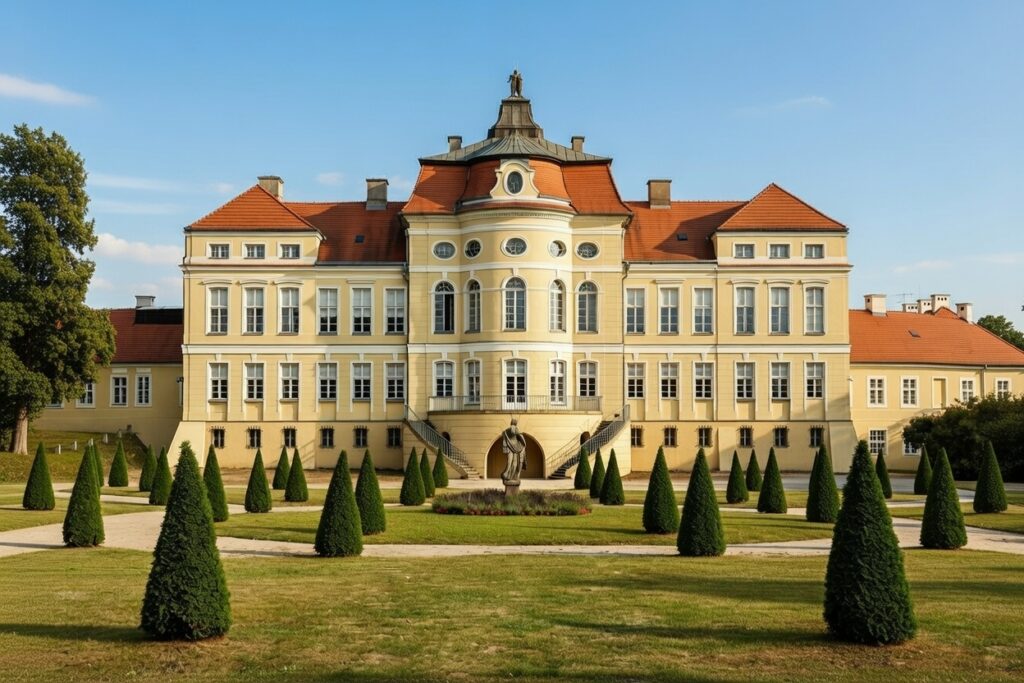
During the late 18th and 19th centuries, successive Raczyński generations expanded both the palace and its grounds. Formal French-style gardens gradually transformed into a naturalistic landscape park extending toward the Warta River. Moreover, this transformation unintentionally preserved existing oak groves already several centuries old. By the late 19th century, Rogalin had become a model of aristocratic residence blending architecture, art, and designed nature.
Edward Raczyński and the Art Gallery
The most significant cultural development occurred under Edward Aleksander Raczyński (1847–1926), who created an outstanding collection of Polish and European paintings. He commissioned a purpose-built modern gallery next to the palace, completed in the early 20th century. The collection numbers around 500 works, including major paintings by Jan Matejko, Jacek Malczewski, Leon Wyczółkowski, and other artists of the Young Poland movement. This made Rogalin one of the first Polish residences designed as a public art museum rather than a purely private collection.
After World War II, the estate survived without major structural damage but was nationalized and gradually integrated into the National Museum in Poznań. Today, visitors can tour restored palace interiors, the painting gallery, and a carriage collection. The original concept of combining art, architecture, and nature remains intact, with the Raczyński family story explained through portraits and period furnishings.
Rogalin Landscape Park and Legendary Oaks
While the palace symbolizes aristocratic culture, the surrounding Rogalin Landscape Park protects one of Europe’s largest groups of monumental pedunculate oaks (*Quercus robur*). The park was formally established in 1997 to safeguard nearly 2,000 oaks growing in the Warta valley, along with river backwaters and cultural landmarks. Surveys conducted since 1904 show approximately 1,435 oaks with trunk circumferences above 2 meters, and around 860 of these are legally protected as nature monuments.
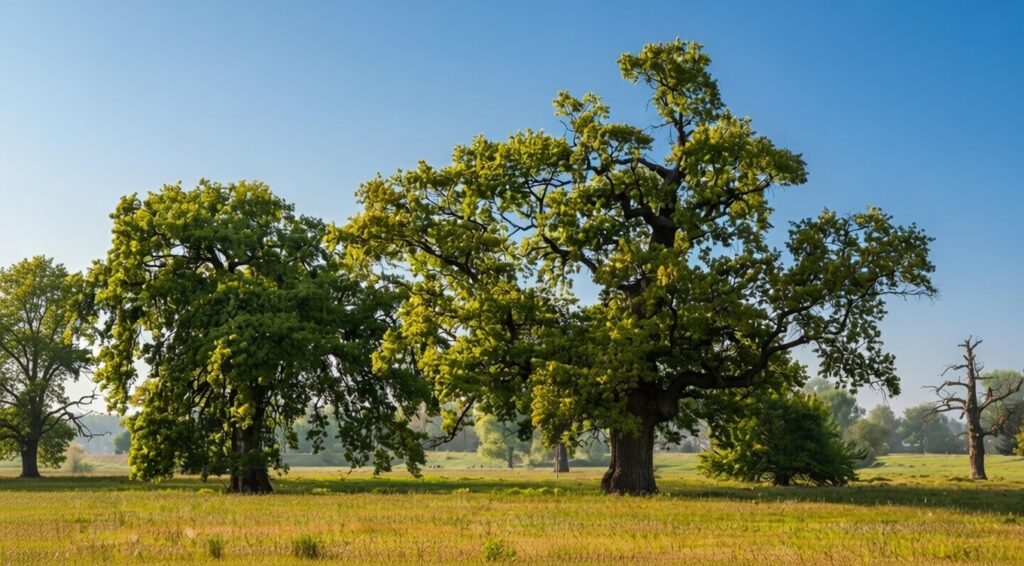
The most famous trees grow in the palace park: Lech, Czech, Rus, and an additional specimen named Edward. Recent measurements list Rus at 9.15 meters in girth, Czech at around 7.35 meters (now dead but still standing as a monumental trunk), Lech at over 6.3 meters, and Edward at 6.18 meters. Some sources describe Rus as potentially the oldest oak in Poland, with age estimates approaching 800 years. These names reference a Slavic foundation legend about three brothers—Lech, Czech, and Rus—who founded Poland, Bohemia, and Ruthenia. The oaks have become an emblem of the Wielkopolska region and a symbol of continuity between natural and cultural heritage at Rogalin.
What to See in Rogalin Palace Poland: Top Attractions & Secret Spots
Rogalin Palace Interiors
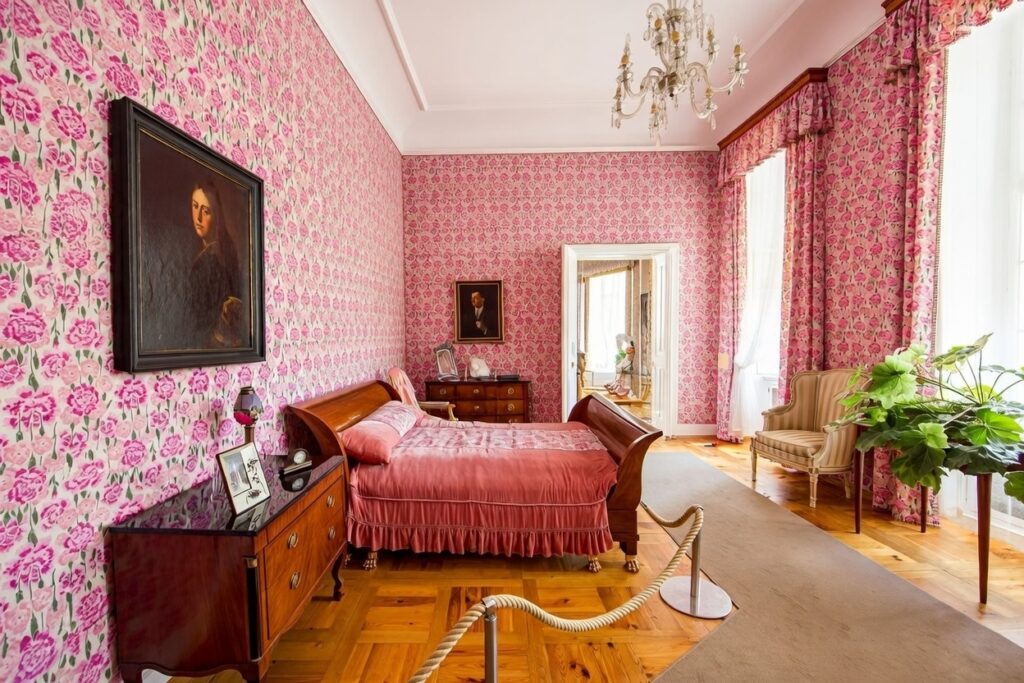
The main palace building showcases restored interiors illustrating Raczyński family life from the 18th to 20th centuries. Visitors follow a route through representative rooms, including the main hall, ballroom, dining rooms, and private apartments. Furnishings blend original items with carefully selected period pieces reflecting aristocratic tastes in Greater Poland. Interpretive panels in Polish and English explain the family’s political and cultural roles.
Opening hours: Typically Tuesday–Sunday, with seasonal time changes; example schedule: 09:00–16:00 in spring and autumn, 10:00–17:00 in summer, shorter hours in winter. Admission: Combined ticket covering palace, gallery, London cabinet, ancestral portrait gallery, and carriage house usually costs around 45 PLN adults (€10); 30 PLN reduced (€6.5); individual palace ticket about 20 PLN adults, 13 PLN reduced. Check current prices before visiting as they can change yearly.
Time needed: 45–60 minutes for palace interiors alone. Insider tip: Arrive early in the morning or late in the afternoon to avoid group tours—rooms feel more atmospheric when not crowded. Photography without flash is generally allowed, but always confirm at the entrance for current rules.
Edward Raczyński Painting Gallery
The separate gallery building houses the core of the Raczyński art collection, one of Poland’s most important ensembles of late 19th and early 20th century painting. Highlights include monumental historical compositions, symbolic works by Jacek Malczewski, and portraits of Polish elites. Natural top-lighting creates favorable viewing conditions and preserves delicate pigments. For many visitors, the gallery rivals palace interiors as the main cultural draw.
Opening hours: Usually aligned with palace schedule but sometimes with slightly different closing times. Admission: Included in the full complex ticket (around 45 PLN adults); separate gallery-only tickets may be available in low season. Time needed: 60–90 minutes for art lovers. Insider tip: Midweek visits outside school holidays offer the quietest atmosphere, allowing you to spend extended time with major works without pressure from following groups.
⭐ Legendary Oaks Lech, Czech & Rus
The three famous oaks stand in the palace park near the Warta valley escarpment, a short walk from the main buildings. Rus, the largest, reaches 9.15 meters in trunk circumference; Lech measures over 6.3 meters; Czech around 7.35 meters, though Czech has been dead since 1992 and survives as a monumental standing trunk. Age estimates suggest these trees sprouted more than 600–800 years ago, predating the current palace by several centuries. Their names reference Slavic legendary brothers and have turned the trees into cultural icons as much as natural monuments.
Access: Free, no ticket required to visit the park and oaks. Opening: Park paths accessible during daylight hours year-round; some sources note extended summer hours up to 20:00. Time needed: 30–45 minutes including leisurely walk from the palace and photography. Insider tip: Visit early morning or late afternoon for soft side light that enhances bark texture and emphasizes the curvature of branches. Autumn, when surrounding trees turn golden, provides especially dramatic compositions with the dark oak trunks.
Rogalin Landscape Park Oak Trails
Beyond the three legendary specimens, the Rogalin Landscape Park stretches along the Warta valley with extensive oak groves. Surveys conducted in the 20th and 21st centuries found around 1,435 pedunculate oaks with circumferences exceeding 2 meters, making this Europe’s largest single concentration of monumental oaks. Many individual trees reach 8–9 meters in girth, and over 800 are listed as protected natural monuments. Marked walking paths and informal tracks lead through riverine forests and meadow edges.
Access: Free; no entrance fee or permits required. Routes: Several loop trails between 2 and 5 kilometers start near the palace and nearby villages. Time needed: 60–120 minutes depending on route. Insider tip: The Warta escarpment viewpoints offer wide panorama views of oak groves and meandering backwaters. Birdwatchers may observe grey herons and other wetland species in reserves such as Krajkowo downstream, which also protects Warta valley habitats connected ecologically to Rogalin.
St. Marcelin Church and Raczyński Mausoleum
On a small hill near the palace stands St. Marcelin Church and the Raczyński family mausoleum. The church combines elements of Baroque and Neo-Gothic style, while the mausoleum contains tombs of several family members, forming an important part of Rogalin’s cultural landscape. The site sits slightly away from main tourist flows, providing a quiet atmospheric corner for reflection.
Access: Short walk from palace courtyard; free exterior access. Interior: Church open for selected services or events; mausoleum interior viewing may be limited or only possible on special occasions. Time needed: 15–20 minutes. Insider tip: Combine a visit here with a walk toward the oak groves—this route offers classic views of the palace framed by tree canopies.
Carriage House and Historic Vehicles
The carriage house and outbuildings display historic horse-drawn vehicles and possibly early motor vehicles associated with the estate. Exhibits illustrate how aristocratic families traveled and transported goods before modern road infrastructure. While a smaller attraction compared to palace interiors and the oak groves, it adds an interesting technical dimension to the visit.
Admission: Typically included within the full palace complex ticket; separate small fee possible in some seasons. Time needed: 20–30 minutes. Insider tip: Families with children often find this section engaging due to the variety of vehicle shapes and sizes, making it a useful stop between more static museum interiors.
How to Reach Rogalin Palace Poland
Location and GPS Coordinates
Rogalin Palace Poland lies in the village of Rogalin, approximately 20 kilometers south of Poznań in Greater Poland Voivodeship. The exact location of the palace complex sits near the Warta River valley, easily accessible by regional roads. GPS coordinates for navigation apps typically use approximately 52.24°N latitude and 16.95°E longitude for the palace area.
From Poznań and Major Cities
From Poznań: Distance around 20–25 kilometers south; driving time 30–40 minutes depending on traffic. The usual route follows road 430 (Poznań–Mosina–Rogalin), which is well signposted with museum directions near the village. Buses or regional connections may operate from Poznań to Mosina or directly to Rogalin on certain days, but schedules change seasonally, so checking current timetables is essential.
From Warsaw: Distance roughly 300–310 kilometers west; driving time 3.5–4 hours. The fastest route uses the A2 motorway toward Poznań, then exits south to route 430 through Mosina to Rogalin. For travelers arriving by train, Warsaw–Poznań services run frequently; from Poznań, you can rent a car, use regional trains to Mosina, or join organized tours combining Rogalin and Kórnik Castle.
From Wrocław: Distance around 170 kilometers north; driving time about 2.5 hours via S5 expressway and local roads. Combining Rogalin with other Greater Poland destinations such as Kórnik and Poznań makes an efficient weekend itinerary.
Parking and Local Access
Rogalin has designated visitor parking areas within walking distance of the palace. Most sources describe on-site parking near the museum entrance, with capacity fluctuating seasonally according to demand. Some lots may be free, while others can charge a modest daily or hourly fee, especially during peak weekends and holidays. Parking availability is generally sufficient outside high summer and long weekends.
Local tip: Arriving before mid-morning (around 10:00) or later in the afternoon improves your chance of finding shaded spots and avoiding congestion. If central parking fills, you can use nearby village streets, respecting local regulations and driveways.
Public Transport Options
Public transport access to Rogalin usually involves a combination of regional train and bus. Trains from Poznań to Mosina or Środa Wielkopolska run regularly; from Mosina, local buses or taxis cover the short distance to Rogalin. Some tourist agencies in Poznań operate half-day or full-day excursions including transport, guided tours, and combined visits to Kórnik Castle, which lies about 13 kilometers from Rogalin.
Walking and cycling: The relatively flat terrain south of Poznań makes cycling a pleasant alternative in warmer months. Cycling routes use local roads and sometimes designated bike paths. Distances between Poznań, Kórnik, Mosina, and Rogalin allow for circuit rides combining multiple attractions in one or two days.
Best Time to Visit Rogalin Palace Poland
Seasonal Overview
Spring (March–May): Temperatures gradually rise from around 8–15°C, and palace grounds emerge from winter dormancy. Early spring offers open views of oak branches without leaves, highlighting trunk structure. By late April and May, fresh greenery covers park lawns and riverine forests. Crowds remain moderate outside long May weekends. Opening hours usually extend to around 09:00–16:00 or 17:00 depending on month.
Summer (June–August): Temperatures typically range 18–25°C, with longer daylight hours. This is peak season for both palace visitors and park walkers. The oaks display full crowns, and landscape park trails feel lush and shaded. However, weekends and holidays can become busy, especially combined with larger tour groups. Summer opening hours may extend to 17:00 or even later; park grounds can stay accessible until around 20:00 according to some current schedules.
Autumn and Winter Conditions
Autumn (September–October): Many visitors consider this the most atmospheric time to see the legendary oaks. As temperatures fall to 10–18°C in September and 5–12°C in October, foliage turns shades of yellow, orange, and brown. The contrast between ancient dark trunks and colorful leaves creates striking photography opportunities. Crowds drop significantly after school holidays, especially on weekdays. Opening hours generally revert to 09:00–16:00, with shorter days in late autumn.
Winter (November–February): Short days and colder temperatures (often between -2 and 5°C) bring quiet to the palace and park. Some palace areas may operate reduced hours; in the darkest months, closing time can be as early as 15:00–16:00. Snowfall, when it occurs, transforms park avenues and oak silhouettes into stark monochrome scenes. However, winter visits require warm clothing and careful planning around limited daylight. On the positive side, even popular weekends feel uncrowded.
Optimal Timing Recommendations
For most travelers, late April–June and September–early October offer the best balance of weather, light, and crowd levels. Spring emphasizes fresh greens and comfortable temperatures for walking in the landscape park. Autumn adds color and softer light ideal for photographing the legendary oaks and palace façades. Summer is appealing if you combine Rogalin with other Greater Poland sites and do not mind larger visitor numbers.
Insider tip: If your main goal is photographing Lech, Czech, and Rus, aim for clear or partly cloudy days in early morning or late afternoon during spring or autumn. These conditions provide low-angle sunlight that sculpts trunk textures and minimizes harsh shadows. Cloudy days work well for even lighting on palace interiors and gallery pieces.
Best Restaurants & Local Food Near Rogalin Palace Poland
On-Site and Nearby Dining
Dwa Pokoje z Kuchnią (Rogalin courtyard): This cozy restaurant located in a converted outbuilding on the palace courtyard serves Polish and regional dishes convenient for visitors who want to eat without leaving the site. Menus often include traditional soups, meat dishes, and desserts, with prices typically in the 30–60 PLN range per person depending on selection. Outdoor seating in season creates a pleasant atmosphere with palace views.
Cafés and kiosks: Seasonal stands near the entrance or parking areas sometimes sell basics such as coffee, cold drinks, ice cream, and snacks. These work well for quick refreshments but do not replace a full meal. Their operation depends on season and visitor traffic.
Budget and Mid-Range Options in Mosina and Puszczykowo
Nearby towns Mosina and Puszczykowo, located within 10–15 kilometers, offer additional restaurants and cafés. Simple milk bars and local eateries serve traditional Polish fare at budget prices, while mid-range restaurants present broader menus including regional specialties. Prices for main courses generally range from 30–80 PLN depending on dish and establishment.
Insider tip: Combining a palace morning visit with lunch in Mosina or Puszczykowo allows you to experience typical Greater Poland small-town dining culture at lower prices than in central Poznań. Look for places frequented by locals rather than high-visibility restaurants aimed purely at tourists.
Dining in Poznań for Evening Meals
Many visitors base themselves in Poznań and treat Rogalin as a half-day trip. In that case, you can enjoy lunch near the palace and return to Poznań for a more sophisticated evening meal. The city offers a wide choice of Polish and international restaurants, from budget bistros to fine dining establishments, making it easy to match your culinary preferences and budget after a day in Rogalin.
Accommodation for Visiting Rogalin Palace Poland
Staying Near Rogalin
Direct accommodation options in Rogalin village are limited. Some guesthouses or agritourism farms may operate in the wider area, providing simple rooms or apartments with rural atmosphere. These can suit travelers seeking quiet overnight stays close to nature and willing to drive short distances to restaurants and shops in nearby towns.
Base in Mosina or Puszczykowo
Mosina and Puszczykowo offer small hotels, guesthouses, and private rooms within convenient driving distance. Rooms typically range between 150 and 350 PLN per night depending on standard and season. Choosing these towns as base works well if you plan to explore both Rogalin and nearby Wielkopolski National Park or Warta valley nature areas. Parking is usually free, and the environment feels more relaxed than large cities.
Using Poznań as a Base
For most international visitors, Poznań provides the most practical accommodation base. The city offers hotels of all categories from budget hostels to upscale properties, with prices typically from 180–250 PLN per night for budget options, 300–600 PLN for mid-range, and higher for boutique or luxury establishments. Driving from Poznań to Rogalin takes around 30–40 minutes, and organized tours reduce the need for car rental.
Recommended strategy: Base in Poznań for cultural, dining, and nightlife options; plan a half- or full-day excursion combining Rogalin Palace Poland, Kórnik Castle, and possibly a short walk in surrounding landscape parks.
What to See Nearby Rogalin Palace Poland
Kórnik Castle (Approx. 13 km)
Kórnik Castle, a Neo-Gothic residence belonging to the Działyński and Zamoyski families, lies roughly 13 kilometers east of Rogalin. It houses a major library and museum with collections of books, manuscripts, and historic interiors. The adjacent arboretum contains thousands of tree and shrub species, including rich rhododendron and azalea plantings. A combined day visiting Rogalin and Kórnik provides an excellent overview of Greater Poland aristocratic culture and landscape design.
Wielkopolski National Park (Approx. 20–25 km)
Northwest of Rogalin, Wielkopolski National Park protects post-glacial landscapes around several lakes and hills. Walking trails and viewpoints offer variety after palace interiors, making the park a good addition for travelers wanting more active nature experiences. It is easily reachable by car from both Rogalin and Poznań, allowing combined itineraries that mix culture and hiking.
Poznań Old Town (Approx. 20–25 km)
Poznań’s reconstructed Old Town, with its colorful townhouses and Renaissance town hall, offers museums, churches, and lively dining streets. After a morning in Rogalin’s quieter surroundings, an afternoon or evening in Poznań balances your day with urban atmosphere. Many travelers choose to visit Rogalin and Poznań on the same day, especially outside the hottest summer months.
Warta Valley Nature Areas
Downstream from Rogalin, protected zones such as the Krajkowo reserve safeguard Warta River backwaters, heron colonies, and riparian forests. Birdwatchers and nature photographers may extend their stay in the region to explore these less-known sites, which share ecological connections with Rogalin’s oak groves.
Suggested Multi-Stop Itineraries
One-day itinerary: Morning at Rogalin Palace Poland (palace + gallery + oaks), afternoon at Kórnik Castle and arboretum, evening return to Poznań Old Town for dinner. Two-day itinerary: Day one Rogalin + Kórnik, day two Poznań city sights or Wielkopolski National Park hiking.
Practical Tips for Visiting Rogalin Palace Poland
Planning Your Visit
Allow at least 3–4 hours to experience Rogalin Palace Poland comfortably, including palace interiors, art gallery, walk to Lech, Czech, and Rus, and a short stroll through the park. Adding longer landscape park walks or extended photography sessions with the oaks can easily extend your stay to a half or full day. Buying a combined ticket for palace and gallery once you arrive usually offers best value; check current options at the ticket office.
Tickets and Opening Hours
Opening hours vary seasonally. Recent schedules indicate general park access from around 09:00, with closing between 16:30 in winter and 20:00 in summer. The ticket office in the museum building typically operates Tuesday–Sunday 08:30–15:30; after that, tickets may be available online only. Full complex tickets (palace, gallery, London cabinet, ancestral gallery, carriage house) cost about 45 PLN adults, 30 PLN reduced; separate cheaper tickets exist for limited sections. Some days, such as one weekday per week, may offer free entrance to selected areas—always verify current rules on the museum website before visiting.
Money and Payments
Ticket offices and on-site restaurant usually accept both cash (PLN) and major credit/debit cards. There is no ATM in the palace grounds, so withdrawing cash in Poznań or Mosina before arrival is recommended. Typical costs for a Rogalin visit include 30–45 PLN for combined tickets, 30–60 PLN for a main meal at the on-site restaurant, and fuel or transport costs from Poznań.
What to Bring
- Comfortable walking shoes: Essential for park paths, oak trails, and palace stairs. Avoid slick soles in wet weather.
- Weather-appropriate clothing: Light layers and a rain jacket in spring and autumn; sun protection in summer; warm coat, hat, and gloves in winter.
- Camera or smartphone: For capturing palace architecture and legendary oaks. A wide-angle lens works well for both interiors and large trees.
- Water bottle and light snacks: Useful if you plan longer walks in the landscape park where no kiosks operate.
Insider Tips and Common Mistakes
- ⭐ Best oak photography: Visit early morning or late afternoon for warm, low-angle light; frame Lech, Czech, and Rus from slightly different distances to emphasize their varied shapes and girths. Consider returning in different seasons if you are working on a larger photo project.
- ⭐ Crowd avoidance: Choose weekdays rather than weekends, especially outside July–August; schedule palace interiors first thing in the morning before larger groups arrive, then explore park paths when the buildings become busier.
- ⭐ Combine culture and nature: Do not limit yourself to palace and three famous oaks—spending additional time in the broader Rogalin Landscape Park reveals dozens of other monumental trees and quieter corners far from main paths.
- ⭐ Check current information: Opening hours, ticket options, and any free-entry days can change yearly; consult the National Museum in Poznań’s official page for Rogalin shortly before your visit to avoid surprises.
- ⭐ Use of car vs. tours: If you are unfamiliar with driving in Poland or prefer not to navigate small roads, look for tours combining Rogalin and Kórnik starting from Poznań—these handle logistics while you focus on the experience.
Accessibility and Visitor Services
Some palace sections and exhibition areas may be accessible to visitors with limited mobility, while others involve stairs and uneven surfaces. Park paths near the palace are generally flat and manageable, but deeper oak trails can become muddy or uneven. Families with children can manage routes with sturdy strollers around the main grounds but may find forest tracks challenging. Basic visitor facilities include restrooms, a small shop or kiosk, and information boards in Polish and often English.
For updated details on accessibility, guided tour languages, special events, and temporary exhibitions, visit the official National Museum in Poznań page for Rogalin or contact the museum directly via phone or email.