ZamośćPoland stands as Europe’s most perfectly preserved Renaissance planned city, inscribed on UNESCO World Heritage List in 1992. This 16th-century urban masterpiece 90 kilometers southeast of Lublin exemplifies ideal city concepts combining military engineering with humanist architectural philosophy. Moreover, Zamość Poland attracts 500,000+ annual visitors seeking authentic Renaissance atmosphere without crowds overwhelming Kraków or Prague. The city was founded in 1580 by magnate Jan Zamoyski as a fortified private town on the lucrative trade route linking Western Europe with the Black Sea.
Zamość Poland appeals to architecture enthusiasts studying Renaissance urban planning with intact bastioned fortifications surrounding a geometric street grid. Additionally, history buffs explore 400+ years of multicultural heritage blending Polish, Armenian, Jewish, and Italian influences. Furthermore, photographers capture pastel-colored townhouses with arcaded ground floors framing the expansive Great Market Square. The Old Town maintains its original Renaissance proportions with UNESCO protection ensuring no modern intrusions compromise historical integrity. Therefore, visitors experience a living museum where daily life unfolds within perfectly preserved 16th-century urban fabric.
This guide reveals secret viewpoints atop bastions overlooking pentagonal fortifications, hidden Armenian merchant houses tourists walk past unknowingly, and optimal times for photographing the Market Square without tour buses. Additionally, you will learn how Zamoyski’s Italian architects created Poland’s most advanced Renaissance fortress using cutting-edge 16th-century military engineering. Furthermore, practical sections cover tickets, transport, authentic regional cuisine, and strategic accommodation choices near the Old Town.
History of Zamość Poland: Renaissance Ideal City
Jan Zamoyski and Foundation of the Ideal City
Chancellor Jan Zamoyski (1542-1605), one of Poland’s wealthiest and most powerful magnates, founded Zamość in 1580 as a private fortified town. He studied at University of Padua where Renaissance humanist ideals profoundly influenced his vision. Consequently, Zamoyski commissioned Italian architect Bernardo Morando to design an “ideal city” incorporating military functionality with harmonious urban aesthetics. The site chosen at the confluence of trade routes between Lviv, Lublin, and the Black Sea promised commercial prosperity.
Morando’s plan created a geometric grid centered on a vast Market Square measuring 100 x 100 meters, among Poland’s largest. Moreover, the design incorporated arcaded townhouses with uniform façade heights creating visual harmony. Additionally, five main streets radiated from the square following strictly controlled proportions. Furthermore, fortifications designed as a nine-bastioned star fortress represented cutting-edge 16th-century military architecture. Therefore, Zamość embodied Renaissance principles: rational planning, classical proportions, and integration of military with civilian functions.
Multicultural Trading Hub and Golden Age
Zamość quickly developed into a major commercial center attracting diverse populations. Jan Zamoyski actively encouraged settlement by granting privileges to Armenian merchants, Greek traders, and Jewish communities. Consequently, by early 17th century, Zamość boasted significant Armenian and Jewish quarters contributing to economic vitality. Moreover, the Academy founded in 1594 by Zamoyski rivaled Kraków’s Jagiellonian University, attracting scholars from across Europe. Additionally, tolerance policies rare in 16th-century Europe fostered multicultural coexistence enriching the city’s character.
The fortress proved its worth during 17th century when Zamość successfully withstood multiple sieges by Cossacks (1648), Swedes (1656), and Russians (1813). Nevertheless, strategic importance gradually declined as warfare evolved and trade routes shifted. Furthermore, partitions of Poland in late 18th century placed Zamość under Austrian then Russian control, interrupting its development as a Polish cultural center.
19th Century Fortress Modernization
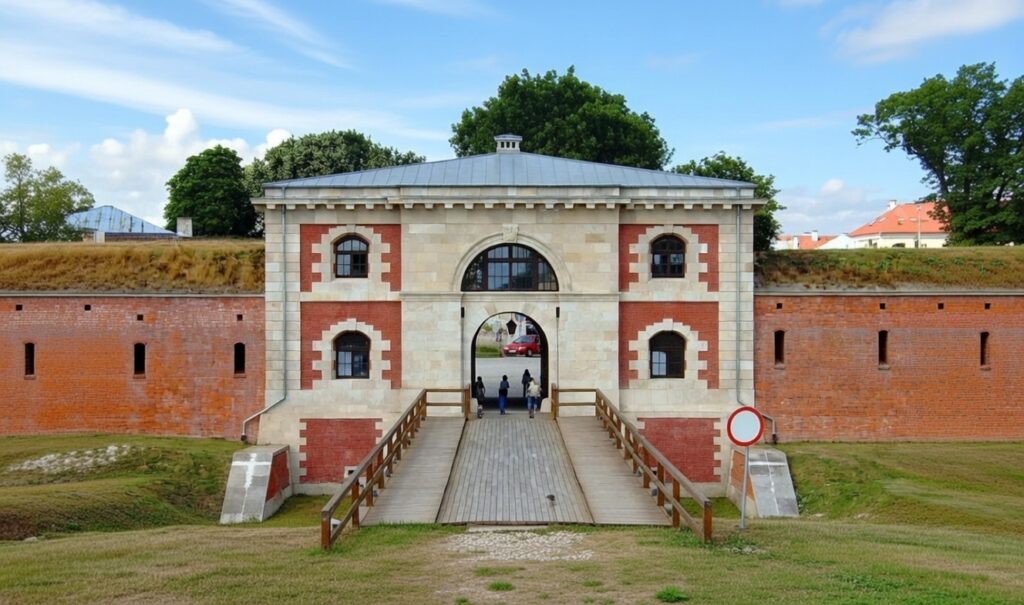
In 1820s-1830s, Russian authorities designated Zamość a strategic state fortress. Consequently, military engineers modernized fortifications using latest 19th-century techniques including earthen ramparts, moats, and advanced bastions. However, these modifications demolished some Renaissance structures and Jewish cemetery areas. Nevertheless, the core Old Town layout remained intact. Additionally, new fortification rings expanded defensive perimeter to approximately 3 kilometers diameter. Therefore, Zamość preserved Renaissance character while gaining formidable 19th-century military infrastructure.
World War II and UNESCO Recognition
Nazi occupation (1939-1945) brought tragedy to Zamość. Moreover, German plans designated the region for colonization, expelling Polish inhabitants and murdering Jewish populations. The Zamość Rotunda, a former Austrian fort, became a Gestapo execution site where 8,000+ prisoners perished. Additionally, concentration camp at Majdanek near Lublin facilitated systematic extermination. Consequently, Zamość’s prewar Jewish community (45% of population) was annihilated, erasing centuries of heritage.
Post-war Poland recognized Zamość’s exceptional value. Moreover, systematic restoration began in 1970s-1980s returning buildings to Renaissance appearance. Therefore, UNESCO inscribed Zamość on World Heritage List in 1992 acknowledging it as “outstanding example of Renaissance planned town of late 16th century, which retains its original layout and fortifications.” Today, comprehensive protection ensures preservation for future generations.
What to See in Zamość Poland: Top Attractions & Hidden Gems
Great Market Square (Rynek Wielki)
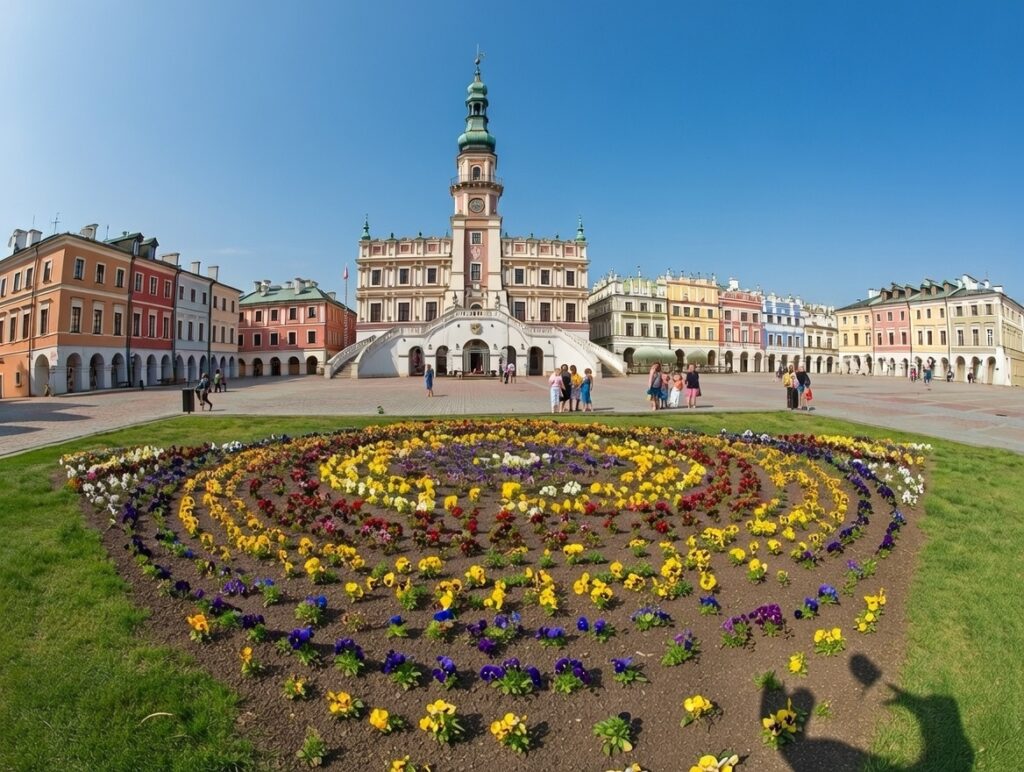
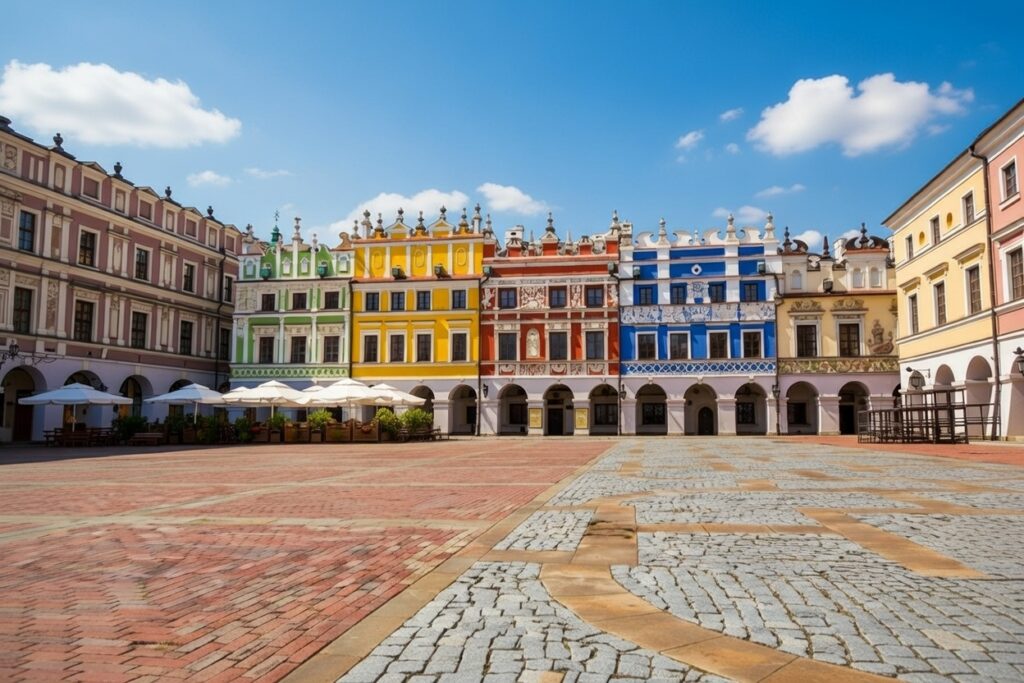
The Market Square forms Zamość’s monumental centerpiece measuring 100 x 100 meters with pastel-colored Renaissance townhouses featuring ground-floor arcades. Moreover, this harmonious ensemble exemplifies Bernardo Morando’s ideal city vision with uniform building heights and classical proportions. Additionally, the square hosts cafés, restaurants, and seasonal outdoor dining creating vibrant social atmosphere. Furthermore, architectural details include decorative attics, wrought-iron work, and restored historical façades maintaining 16th-century character.
Access: Public space, FREE entry 24/7. Central landmark: Town Hall with distinctive tower visible from distance. Time needed: 30-45 minutes walking perimeter examining architectural details. Best visited: Early morning (07:00-09:00) for empty square photography or late afternoon when cafés fill with locals. Insider tip: Northeast corner arcades contain 16th-century ceiling frescoes often overlooked by tourists focusing on square center. Additionally, count house numbers—original Renaissance numbering system still visible on some façades.
Zamość Cathedral (Katedra Zamojska)
The Renaissance-Baroque Cathedral located on Kolegiacka Street combines monumental proportions with restrained decoration characteristic of Counter-Reformation architecture. Moreover, interior features ornate Baroque altars, 17th-century paintings, and Jan Zamoyski’s tomb in the presbytery. Additionally, bell tower offers panoramic city views after climbing 200+ steps. Furthermore, the cathedral served as spiritual center for Zamość Academy linking religious and educational functions.
Opening hours: Daily 08:00-18:00; Sunday mass schedules may limit tourist access. Admission: Cathedral FREE; bell tower climb 10 PLN adults, 6 PLN reduced. Time needed: 30 minutes interior; additional 20 minutes for tower climb. Insider tip: Attend Sunday 10:00 mass for full liturgical experience with organ music filling Renaissance acoustics—respectful visitors welcome to observe from rear pews.
⭐ Bastion Fortifications Walk
Zamość’s seven surviving Renaissance bastions (originally nine) create a star-shaped defensive perimeter accessible via walking paths. Moreover, bastions connect through earthen ramparts allowing complete circuit of Old Town perimeter. Additionally, each bastion’s angular design deflected cannon fire while providing overlapping fields of artillery coverage. Furthermore, 19th-century modifications added earthworks and moats still visible today.
Access: FREE; paths open dawn-dusk year-round. Starting point: Bastion VII near Lwowska Gate (GPS: 50.7178°N, 23.2527°E). Circuit distance: Approximately 3 kilometers complete loop; 60-90 minutes leisurely pace. Trail difficulty: Easy; mostly flat grass and gravel paths. Insider tip: Bastion III’s southwestern corner provides Zamość’s best panoramic photography vantage—elevated position captures entire Old Town with cathedral spires, townhouse roofs, and geometric street grid. Moreover, sunset (18:00-19:30 May-August) casts golden light across pastel façades creating postcard-perfect compositions. Additionally, 90% of visitors never discover bastions focusing solely on Market Square attractions.
Zamość Museum (Muzeum Zamojskie)
Located in former Arsenal building, museum collections document city history from Renaissance foundation through World War II. Moreover, exhibits include architectural models, historic weapons, Renaissance-era artifacts, and multicultural heritage displays. Additionally, special sections cover Armenian merchants, Jewish community life before Holocaust, and Jan Zamoyski’s biography. Furthermore, temporary exhibitions rotate seasonally featuring regional art and historical themes.
Location: Ormiańska Street 30. Opening hours: Tuesday-Sunday 09:00-17:00; closed Monday. Admission: 15 PLN adults, 10 PLN reduced, FREE on Tuesdays. Time needed: 60-90 minutes comprehensive visit. Insider tip: Museum basement (rarely visited) contains Renaissance-era cellars with original vaulted ceilings—access by requesting staff permission. Moreover, admission ticket includes entry to nearby Synagogue Museum and Bell Tower creating combined value.
⭐ Armenian Houses and Merchant Quarter
Ormiańska Street preserves remnants of Zamość’s once-thriving Armenian merchant community granted settlement privileges in 1580s. Moreover, distinctive townhouses feature architectural elements blending Polish Renaissance with Armenian decorative traditions. Additionally, several houses retain original trading courtyards where exotic goods from Ottoman Empire were sold. However, most tourists walk this street unaware of its historical significance focusing instead on main square attractions.
Location: Ormiańska Street between Market Square and Zamość Museum. Access: Public street, FREE. Time needed: 20-30 minutes walking with architectural observation. Key buildings: House No. 28 (Museum entrance) and House No. 30 with preserved 16th-century portal. Insider tip: Ground-floor arcades contain carved stone merchant marks indicating original owners’ trade specializations—look for symbols above doorways representing spices, textiles, or metalwork. Additionally, courtyards occasionally open during summer allowing glimpses of interior Renaissance architecture normally hidden from street view.
Old Lublin Gate (Brama Lubelska)
This monumental city gate from 1580s served as main northern entrance controlling access along the crucial Lublin trade route. Moreover, the gate’s distinctive Renaissance proportions and defensive features including machicolations (openings for dropping projectiles) exemplify military architecture. Additionally, upper levels housed guards and gate machinery. Furthermore, decorative attic added in 17th century provides architectural contrast.
Access: Exterior FREE; interior sometimes accessible during museum hours. Location: Northern Old Town perimeter. Time needed: 15-20 minutes. Photography: Best photographed from outside walls at sunrise (06:30-07:30 May-September) when eastern light illuminates façade. Insider tip: Walk through gate passage examining original iron gates and portcullis grooves—rare surviving 16th-century defensive mechanisms.
Synagogue and Jewish Heritage Sites
Zamość’s Synagogue (17th century) now functions as public library though architectural elements survive including women’s gallery and decorative details. Moreover, commemorative sites remember Jewish community comprising 45% of prewar population before Holocaust annihilation. Additionally, Jewish cemetery (partially destroyed 1830s for fortifications) retains fragment with Holocaust memorial. Furthermore, Museum of Lost Jewish Community occupies former ritual bathhouse documenting 400 years of Jewish life in Zamość.
Synagogue location: Pereca Street. Hours: Monday-Friday 09:00-17:00 as library. Museum of Lost Jewish Community: Bazyliańska Street; hours vary seasonally; admission 8 PLN. Time needed: 45-60 minutes combined. Insider tip: Jewish cemetery memorial on Prosta Street receives few visitors despite historical significance—peaceful location for contemplating tragedy of Holocaust in Zamość region.
How to Reach Zamość Poland
Location and Regional Context
Zamość Poland sits in southeastern Poland’s Lublin Voivodeship, approximately 90 kilometers southeast of Lublin and 250 kilometers south of Warsaw. Moreover, GPS coordinates 50.7231°N, 23.2522°E locate the Old Town center. Additionally, positioning near Ukrainian border (80 km) and Roztocze National Park (30 km) facilitates multi-destination regional tours. Furthermore, the city serves as gateway to lesser-known southeastern Poland attractions.
From Major Cities by Car and Bus
From Warsaw: 250 kilometers southeast; 3-3.5 hours driving via S17 expressway through Lublin. Additionally, direct buses operate from Warsaw Zachodnia station; 4-5 hours journey; 40-60 PLN one-way. Moreover, Polski Bus and FlixBus run 2-4 daily departures. Therefore, advance online booking recommended especially weekends.
From Kraków: 280 kilometers east; 3.5-4 hours via A4 motorway to Rzeszów then Route 77 north. Buses less frequent; 5-6 hours with connection in Lublin typically required.
From Lublin: 90 kilometers southeast; 90 minutes driving via Route 17. Moreover, frequent buses depart hourly from Lublin main station; 2 hours journey; 20-30 PLN. Additionally, this represents most common approach for international travelers flying into Warsaw or Kraków.
Parking in Zamość: Paid parking lots surround Old Town walls. Rates: 3-5 PLN/hour; 30-40 PLN daily maximum. Locations: Parking near Bazyliańska Gate (GPS: 50.7198°N, 23.2545°E) offers 200+ spaces within 5-minute walk to Market Square. Local tip: Free street parking exists 500+ meters from center in residential areas—legal and safe but requires 10-15 minute walk carrying luggage.
By Train
Zamość train station lies 1 kilometer south of Old Town with limited service. Moreover, Lublin-Zamość regional trains operate 3-4 times daily; 2.5 hours journey; 20-25 PLN. However, buses generally faster and more frequent. Additionally, from Warsaw, changing trains in Lublin adds 1-2 hours versus direct bus. Therefore, rail works better for travelers specifically touring southeastern Poland’s rail network.
Station to Old Town: 15-minute walk north on Królowej Jadwigi Street; taxi 15-20 PLN; local bus 2 PLN (limited schedule). Local tip: If arriving by train, walk rather than wait for infrequent local buses—route passes through interesting 19th-century districts showing Zamość beyond tourist zones.
Organized Tours from Warsaw or Kraków
Several companies offer day trips combining Zamość with nearby attractions such as Majdanek concentration camp memorial or Kozłówka Palace. Moreover, tours typically cost 250-400 PLN including transport and guide. Additionally, this option suits travelers without rental cars wanting comprehensive regional context. However, group tours allow only 3-4 hours in Zamość—insufficient for thorough exploration. Therefore, independent travelers benefit from overnight stays enabling deeper immersion.
Best Time to Visit Zamość Poland
Peak Season (June-August)
Weather: 20-26°C; sunshine 8-10 hours daily. Weekend crowds reach 3,000-5,000 daily visitors. Consequently, Market Square cafés fill rapidly requiring reservations. Additionally, hotel prices peak 30-40% above off-season. Moreover, tour buses concentrate 10:00-16:00 creating congestion at major sites.
Advantages: Longest daylight hours (04:30-21:00 June) maximize sightseeing time. Furthermore, full restaurant and museum hours operate. Additionally, outdoor concerts and cultural festivals animate Market Square evenings. Moreover, warm weather suits extended bastion walks. Disadvantages: Excessive crowds limit intimate city experience. Additionally, photography difficult due to constant tourist presence. Furthermore, accommodation requires advance booking minimum two weeks. Moreover, heat (25°C+) uncomfortable for midday walking on shadeless fortifications.
Shoulder Season (April-May, September-October)
Weather: 12-20°C; occasional rain but frequent sunshine. Visitor numbers drop 60% compared to peak. Consequently, weekdays see only 500-1,000 tourists allowing authentic exploration. Additionally, hotel prices return to baseline. Moreover, comfortable temperatures suit extended walking without overheating.
Spring advantages (April-May): Fresh greenery covers bastions and parks. Furthermore, fewer Polish domestic tourists (who concentrate in summer). Additionally, Easter week brings special religious events and traditional foods. Moreover, May weather generally settled with minimal rain. Autumn advantages (September-October): Golden light ideal for photography—low sun angles at 16:00-18:00 create warm tones on pastel façades. Furthermore, local harvest festivals showcase regional agriculture. Additionally, September Film Festival brings international cultural programming. Moreover, October foliage adds color to fortification walks.
Weather: -5 to 8°C; snow possible December-February. Visitor numbers minimal—100-300 daily. Moreover, many Old Town hotels close November-March. Additionally, several restaurants operate weekends only or close entirely. Hotel prices 40-50% below summer rates for remaining open properties.
Best overall: May or September offer ideal balance—moderate 16-22°C temperatures, 60% fewer crowds than summer, full opening hours maintained, and baseline accommodation pricing. Moreover, May provides longer daylight than September but slightly higher visitor numbers around May holidays. Best for photography: September-early October combines autumn light quality with comfortable temperatures for dawn/dusk shooting—golden hour (17:00-18:30) illuminates Renaissance façades optimally. Best for solitude: Weekday January-February guarantees private city experience though requires tolerance for harsh winter conditions.
Best Restaurants & Hidden Food Spots in Zamość Poland
Budget Options (25-55 PLN per person)
Bar Mleczny “Zamojski” (Staszica Street 8) serves authentic milk bar cuisine at 1980s pricing. Moreover, menu features Polish staples: żurek 14 PLN, placki ziemniaczane 16 PLN, bigos 12 PLN, pierogi 18 PLN per 10-piece. Additionally, daily specials (soup + main) cost 24 PLN Monday-Friday 11:00-15:00. Hours: Monday-Friday 08:00-17:00; Saturday 09:00-15:00; closed Sunday. Cash only. Why locals love it: Genuine workers’ canteen atmosphere; massive portions; total bill under 30 PLN typical.
Pizzeria “Bohema” (Market Square arcade) offers budget-friendly pizzas 28-42 PLN depending on size. Moreover, pasta dishes 24-36 PLN provide quick casual meals. Additionally, outdoor Market Square seating available May-September. Hours: Daily 11:00-22:00. Cards accepted.
Mid-Range Dining (55-130 PLN per person)
Restauracja Kuchnia u Hieronima (Staszica Street 13) specializes in regional Zamość cuisine emphasizing traditional recipes. Consequently, signature dishes include rabbit in prunes 68 PLN, venison stew 74 PLN, duck with apple 72 PLN. Moreover, Renaissance-inspired interiors recreate 16th-century tavern atmosphere. Additionally, lunch specials Monday-Friday (12:00-15:00) offer soup + main 42 PLN. Hours: Tuesday-Sunday 12:00-22:00; closed Monday. Reservations recommended weekends.
Restauracja Bohema (Market Square basement) provides atmospheric dining in historic vaulted cellars. Moreover, menu blends Polish and international: grilled trout 58 PLN, chicken ragout 52 PLN, beef tenderloin 88 PLN. Additionally, local green beer (specialty Zamość brew) 18 PLN distinguishes this establishment. Hours: Daily 12:00-23:00. Reservations essential summer weekends.
Local Secret and Regional Specialties
Karczma Hetmańska (Bazyliańska Street, unlisted most guides) operates in renovated 17th-century building frequented by local families. Therefore, authentic atmosphere without tourist markup. Specialties include duck blood soup (czernina) 28 PLN, hunter’s stew 38 PLN, homemade sausages 42 PLN. Moreover, traditional Polish desserts include poppy seed cake 14 PLN. Cash preferred. Hours: Wednesday-Sunday 13:00-21:00; closed Monday-Tuesday. Insider ordering tip: Request “zestaw staropolski” (Old Polish set) 58 PLN—chef’s selection of three traditional appetizers plus main course showcasing seasonal regional ingredients not listed standard menu.
Regional specialty: Try krupnik (honey-spiced vodka) 12-18 PLN per shot—Zamość region famous for this warming liqueur traditionally served hot in winter. Additionally, kiszka (blood sausage with buckwheat) appears on traditional restaurant menus 24-32 PLN—authentic regional dish tourists often miss. Furthermore, Armenian flatbread (lavash) sold at bakeries reflects historical Armenian community influence—unique to Zamość among Polish cities.
Accommodation in Zamość Poland
Budget (120-320 PLN/night)
Hotel Pod Czarnym Orłem (Rynek Wielki 27, Market Square) offers basic rooms 180-260 PLN/night doubles in historic townhouse. Moreover, unbeatable location directly on square. Additionally, breakfast included; shared bathrooms some rooms. Family-run; basic English. Booking: Direct phone or standard platforms. Note: Noise possible from Market Square cafés—request courtyard-facing rooms for quiet.
Rezydencja Chomienne (Bazyliańska Street) provides guesthouse accommodation 150-240 PLN/night. Furthermore, modern amenities in renovated historic building; private bathrooms; free parking. Additionally, 5-minute walk to Market Square. Booking: booking.com or direct.
Mid-Range (320-650 PLN/night)
Hotel Sukcesor (Żeromskiego Street 8) features apartment-style rooms 380-550 PLN/night including excellent breakfast buffet. Moreover, family-friendly with children’s playroom. Additionally, modern bathrooms; kitchenettes; contactless check-in weekends. Furthermore, 300 meters from Market Square. Reception speaks English. Booking: Standard platforms.
Hotel Zamojski (Market Square location) charges 420-620 PLN/night for rooms with square views. Additionally, restaurant on-site; full hotel amenities. Moreover, premium location justifies higher pricing. Booking: Advance required summer; standard platforms.
Upscale and Alternative Base
Palac Zamoyskich Luxury Hotel (when open seasonally) occupies restored aristocratic residence; 780-1,100 PLN/night. Moreover, spa facilities; fine dining; period furnishings. However, limited 12 rooms require months-advance booking. Booking: Direct via property website.
Alternative base: Lublin (90 km): Larger city offers 50+ hotels all categories 200-700 PLN/night. Moreover, better restaurant variety; nightlife; cultural attractions. Additionally, train/bus connections enable Zamość day trips. Consequently, multi-day southeastern Poland tours often base Lublin visiting Zamość, Majdanek, Kozłówka as excursions.
What to See Nearby Zamość Poland
Roztocze National Park (30 km)
Protected forested uplands feature hiking trails, limestone formations, and traditional wooden villages. Moreover, rare flora includes European yew groves and limestone meadows. Additionally, marked trails 5-15 kilometers suit day hikes. Access: Car required; no public transport. Time needed: Half-day to full day. Allow 4-5 hours including Zwierzyniec town visit. Consequently, nature lovers combine Zamość cultural experience with Roztocze wilderness exploration.
Majdanek Concentration Camp Memorial (Lublin, 90 km)
One of Europe’s best-preserved Nazi extermination camps where 78,000+ prisoners died 1941-1944. Moreover, barracks, gas chambers, crematorium remain intact as sobering Holocaust memorial. Admission: FREE. Hours: Daily 09:00-17:00. Allow 2-3 hours. Therefore, combining Zamość with Majdanek creates comprehensive southeastern Poland historical itinerary spanning Renaissance glory through 20th-century tragedy.
Kozłówka Palace (70 km)
Baroque-Rococo residence housing Polish Socialist Realism art museum—unique collection documenting communist-era propaganda art. Moreover, palace interiors preserve aristocratic 18th-19th century lifestyle. Admission: 30 PLN combined ticket. Time needed: 2-3 hours. Allow half-day including travel from Zamość.
Krasnobród (35 km)
Pilgrimage town with Franciscan monastery in Roztocze foothills. Moreover, Baroque church attracts religious tourists. Additionally, gateway to Roztocze hiking trails. Access: Car or limited bus service from Zamość. Allow 2-3 hours visit.
Suggested Multi-Day Itinerary
Day 1: Zamość Poland comprehensive exploration (Old Town, bastions, museums). Day 2: Morning Roztocze National Park hiking; afternoon return Zamość or drive to Lublin. Day 3: Majdanek memorial + Lublin Old Town. Consequently, this creates balanced southeastern Poland tour combining UNESCO heritage, nature, and Holocaust remembrance. Base either Zamość (2 nights) or Lublin (centralized base for three destinations).
Practical Tips for Visiting Zamość Poland
Planning Your Visit
Allow full day minimum for comprehensive Zamość Poland experience. Moreover, sample itinerary: 09:00 Market Square and cathedral; 11:00 museum complex; 13:00 lunch; 15:00 bastion fortifications walk; 17:00 Armenian quarter; 18:30 sunset photography from Bastion III. Additionally, overnight stay enables relaxed pace and evening atmosphere appreciation. Advance booking unnecessary except summer weekends—purchase museum tickets on-site. Furthermore, multi-day southeastern Poland tours combine Zamość with Roztocze, Lublin, Majdanek creating 2-3 day regional circuit.
Tickets and Opening Hours
Old Town access: FREE—public streets and squares open 24/7. Museums: Combined ticket (Zamość Museum + Synagogue + Bell Tower) 25 PLN adults; 18 PLN reduced; FREE Tuesdays. Individual attractions: Bell tower 10 PLN; Museum 15 PLN. Hours: Most museums Tuesday-Sunday 09:00-17:00; closed Mondays. Cathedral daily 08:00-18:00 FREE (tower climb 10 PLN).
Money and Language
Ticket offices and restaurants accept cash (PLN) and major cards. Moreover, ATMs line Market Square and surrounding streets. Additionally, exchange offices (kantor) offer better rates than banks. Typical costs: Combined museum tickets 25 PLN; lunch 35-65 PLN; coffee 12 PLN; hotel 250-500 PLN/night mid-range. Budget 120-150 PLN per person daily excluding accommodation.
Staff English proficiency: Good at hotels and main restaurants; limited at budget eateries and shops. Moreover, museum signage bilingual (Polish-English). Additionally, younger Poles generally speak functional English. Useful phrases: “Dzień dobry” (hello), “Dziękuję” (thank you), “Ile kosztuje?” (how much?).
What to Bring
Comfortable walking shoes: Essential for cobblestone streets and 3-kilometer bastion walks. Moreover, avoid slick soles when wet. Additionally, castle stairs require sturdy footwear.
Weather layers: Light jacket April-October for evening temperature drops. Furthermore, winter requires heavy coat, gloves, hat for -5°C conditions. Additionally, rain gear spring/autumn for sudden showers.
Supplies: Water bottle for bastion walks—limited fountains. Moreover, snacks if visiting off-season when fewer restaurants open. Additionally, sunscreen and hat June-August—shadeless fortification paths exposed to sun.
Insider Tips and Secrets
⭐ Best photography: Bastion III southwestern corner at sunset (18:00-19:30 May-August) captures entire Old Town with warm light on pastel façades. Moreover, Market Square empty 06:30-07:30 allows architectural photography without tourists. Additionally, cathedral tower at 08:00 opening provides 360-degree aerial views before crowds arrive.
⭐ Crowd avoidance: Weekdays April-May and September-October see 80% fewer visitors than summer weekends. Moreover, 07:00-09:00 morning window enables private Market Square exploration. Additionally, bastions remain virtually deserted even peak season—only 5% of tourists walk complete circuit.
⭐ Hidden architectural details: Look up at attic decorations and gables—Renaissance sculptures and dates visible above typical eye level. Moreover, arcade ceilings preserve 16th-century frescoes especially northeast Market Square corner. Additionally, merchant marks carved above doorways on Ormiańska Street indicate original Armenian traders’ specializations.
⭐ Free experiences: Entire Old Town FREE to explore; bastion walks FREE; church exteriors FREE; Market Square atmosphere FREE. Therefore, budget travelers thoroughly experience Zamość spending only 25 PLN museums + 40 PLN meal total.
⭐ Local shortcut: Passage through Town Hall arcade connects opposite Market Square sides—locals use this year-round avoiding long perimeter walks. Moreover, provides interesting vaulted interior glimpse normally overlooked.
⭐ Seasonal secret: September Film Festival (check dates annually) screens international films in atmospheric Old Town venues—affordable culture access combining cinema with UNESCO architecture.
Safety and Accessibility
Safety: Zamość very safe for solo travelers—crime virtually nonexistent in Old Town. However, avoid leaving valuables visible in parked cars. Additionally, well-lit streets enable safe evening walking. Moreover, locals helpful assisting lost tourists.
Accessibility: Partial—Market Square and main streets wheelchair accessible though cobblestones challenging. Moreover, some museums have elevators; others only stairs. Additionally, bastion paths uneven grass—standard wheelchairs difficult; all-terrain possible with assistance. Therefore, mobility-impaired visitors access 50-60% of attractions comfortably. Cathedral ground level accessible; tower requires stair climbing. Hotels increasingly install elevators and ramps—verify when booking.
Tourist Information
Zamość Tourist Information Center (Rynek Wielki 13, Market Square; phone +48 84 639 2292) operates daily May-September 09:00-18:00; October-April Monday-Friday 09:00-17:00. Moreover, staff provides maps, accommodation assistance, event schedules. Additionally, official website zamosctravel.eu offers current hours and events. Emergency: 112 (EU standard). Nearest hospital: Szpital Wojewódzki, Aleja Jana Pawła II; 2 km from Old Town (5-minute drive).